When a family has a wedding to travel for, it should be a season of joy. But for adult children who also care for an aging parent, even the happiest occasion can come with a quiet undercurrent of worry. Who will be there while we are away? Will Dad be safe? Will he be okay?
That was exactly the question facing one South Shore Massachusetts family as they prepared to leave for a destination wedding. Their father, Frederick, 82, was recovering from a stroke and needed daily support. His daughter had been his steady presence, helping him keep up with his recovery and the rhythms of everyday life. Stepping away, even for something as meaningful as a family wedding, felt impossible without the right support in place.
What Is Respite Care?
Respite care is short-term, flexible home care that steps in when a family caregiver needs to be away or simply needs a break. It can last a single afternoon, a few days, a couple of weeks, or it can become a regular, recurring part of a family’s routine.
The idea behind it is simple. Caring for an aging loved one is a meaningful role, and often a demanding one. Most family caregivers are also juggling jobs, children, households, and lives of their own. Respite care gives them the chance to step back and recharge, attend to their own needs, or travel with confidence, all while their loved one continues to receive customized, expert, compassionate support at home.
In practice, respite care can include the same range of services a family relies on every day. That might mean help with activities of daily living, personal care, transportation, meal preparation, light housekeeping, medication reminders, mobility and exercise support, overnight assistance, and the companionship that keeps a loved one engaged and connected. Each care plan is shaped around the individual’s specific needs, so it blends with the routines and types of care a family’s loved one is accustomed to.
The Challenge: Juggling Senior Home Care and Family Travel Needs
Frederick was working hard on his recovery, partnering with a physical therapist and an occupational therapist to rebuild his strength and independence. That progress depended on consistency, and his needs touched nearly every part of his day.
He needed reliable transportation to and from his appointments. He needed household support, including meal preparation and light housekeeping, so his home stayed comfortable and his nutrition stayed on track. He needed help staying faithful to the stretching and exercise regimen his therapists had designed, the kind of daily follow-through that makes all the difference in stroke recovery.
He also needed overnight assistance. Frederick woke frequently during the night and needed help getting safely to and from the bathroom, a common and very real concern for families worried about nighttime falls.
And beyond the practical tasks, Frederick needed companionship. Recovery can be isolating, and meaningful engagement and conversation are an important part of staying well, both in body and in spirit.
For his daughter, the question was not only how to cover all of this while the family was away. It was how to do it in a way that would feel comfortable and familiar to her father, rather than jarring or impersonal.
A Graceful Approach to Respite Home Care for Seniors
Rather than introducing full-time care all at once on the eve of the trip, the family worked with North River Home Care to ease into it.
In the two weeks leading up to the wedding, North River provided a couple of shifts each week. This gave Frederick time to settle into having support at home, and just as importantly, time to get to know his caregivers before his family left. By the time the wedding arrived, the caregivers were no longer strangers. They were familiar, trusted faces who already understood Frederick’s routine, his preferences, and his recovery goals.
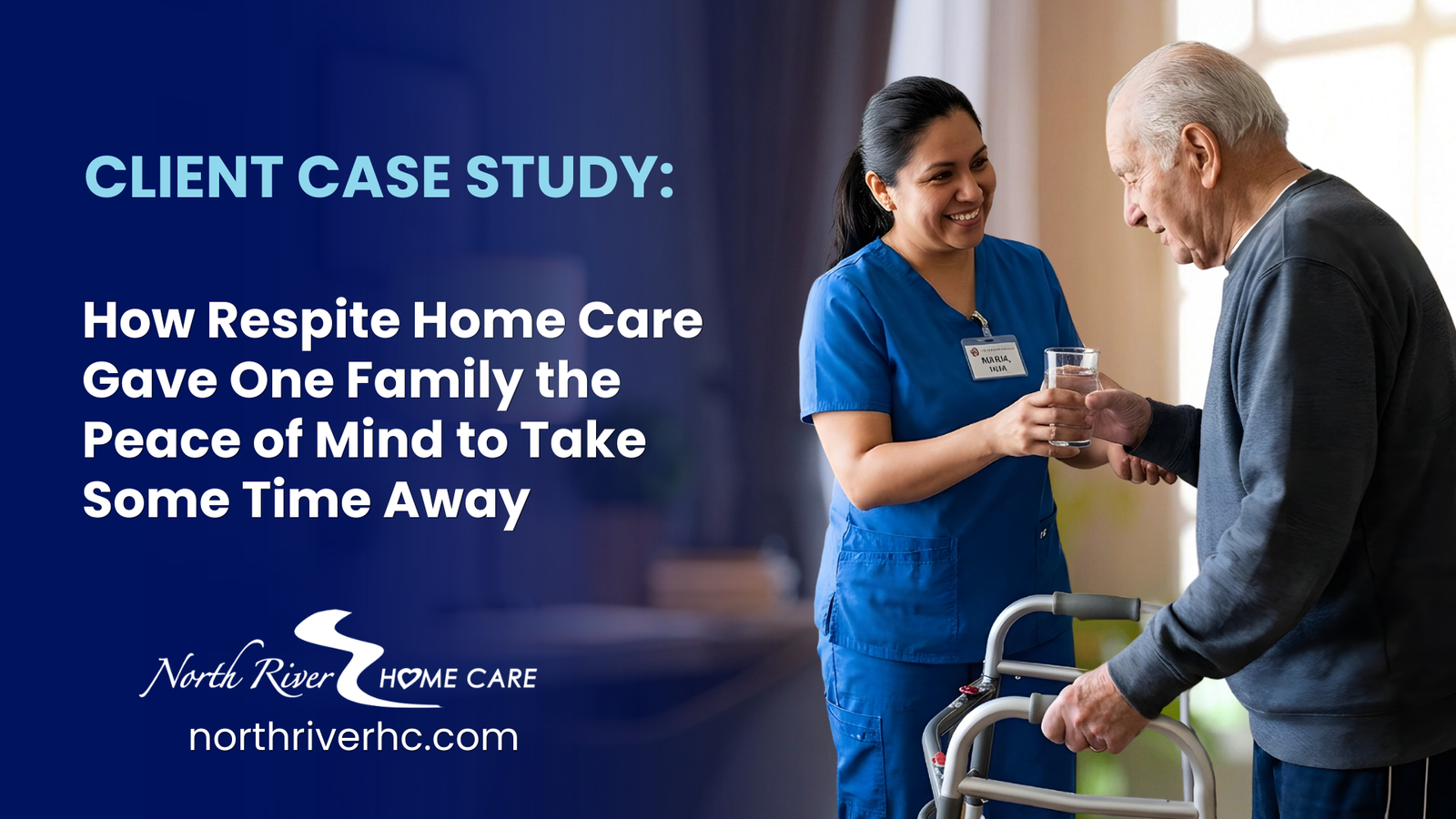
Once the family was away, North River’s caregivers were there for everything Frederick needed. They drove him to his therapy appointments and supported his exercise and stretching routine, so his recovery never lost momentum. They prepared his meals and kept his home tidy and comfortable. They provided overnight assistance, so he had a steady, reassuring presence whenever he woke during the night. And throughout the day, they offered the conversation and companionship that made the time feel less like care and more like good company.
The Outcome
The family traveled to the wedding and celebrated fully present, knowing their father was genuinely well cared for. The peace of mind they had hoped for was real. Instead of checking in anxiously from afar, they were able to be in the moment with the people they love.
But the most telling outcome came after they returned home. Frederick had enjoyed the support and the company of his caregivers so much that he chose to continue. What began as short-term respite care became an ongoing part of his week, with three daytime shifts that help him stay on track with his recovery, stay connected, and continue living comfortably and confidently at home.
As his daughter put it:
“We left for the wedding hoping Dad would simply be okay while we were gone. We came home to find he was thriving, and that he wanted to keep his caregivers in his life, something he had previously been resistant to. That tells you everything.”
When Do Families Turn to Respite Home Care for Their Aging Loved Ones?
Frederick’s family came to respite care because of a wedding, but the reasons families reach out are varied. Some needs are short-term and occasional, while others are part of an ongoing rhythm that helps a caregiver stay healthy and whole. A few of the most common include:
- Vacations and getaways. A long-awaited trip, a family reunion, or a quiet week away to rest and reset, knowing a loved one is well cared for at home.
- Weddings and family celebrations. Travel for the milestones that matter, from weddings to graduations to holidays, without leaving anyone behind in spirit or in care.
- Business trips and work travel. Reliable coverage when a caregiver is called away for work and cannot be in two places at once.
- Regular self-care breaks. Standing, recurring support so a caregiver can take a fitness or yoga class, sign up for a course, join a book club, or simply set aside a few hours each week that are truly their own.
- Personal appointments and errands. Dedicated time to keep up with their own medical, dental, and wellness appointments, or to handle the everyday errands that are hard to manage while caregiving.
- Rest and recovery for the caregiver. A chance to recharge during a stretch of burnout, or coverage while the caregiver themselves recovers from an illness, a procedure, or surgery.
- Social connection. Time to nurture friendships, attend events, or enjoy a standing dinner or coffee date, the kinds of small but vital moments that protect a caregiver’s own wellbeing.
- A gentle introduction to home care. As it was for Frederick, a way to ease into support gradually, giving a loved one time to grow comfortable with care before a larger need arises.
Whatever the reason, respite care meets families where they are. It can be a one-time arrangement or a dependable weekly fixture, scaled up or down as life changes.
Why Respite Home Care Works
Frederick’s story reflects what respite care does at its best. It gives family caregivers the freedom to step away for the things that matter, whether that is a wedding, a vacation, or simply a much needed rest, with confidence that their loved one is in caring, capable hands.
It also shows the value of starting early. Introducing care gradually, before the moment of need, allowed Frederick to build real relationships with his caregivers and made the transition feel natural rather than abrupt.
To be the best possible caregiver for someone you love, it is important to be able to care for yourself too. Remember, you can’t pour from an empty cup. Respite care makes that possible, and sometimes, as it did for Frederick, it opens the door to a kind of support and connection a family did not even realize they were looking for.