There is a moment that looks different for everyone but is unmistakable when it arrives: when you realize the relationship with your mother has shifted somewhere along the way.
Maybe it’s the first time you fill her weekly pill organizer instead of watching her do it. Perhaps it’s the afternoon you need to take the car keys, after a close call none of you want to talk about. Maybe it’s a phone call from her doctor that ends with you taking notes, asking the follow-up questions, and quietly becoming the person in charge of what happens next.
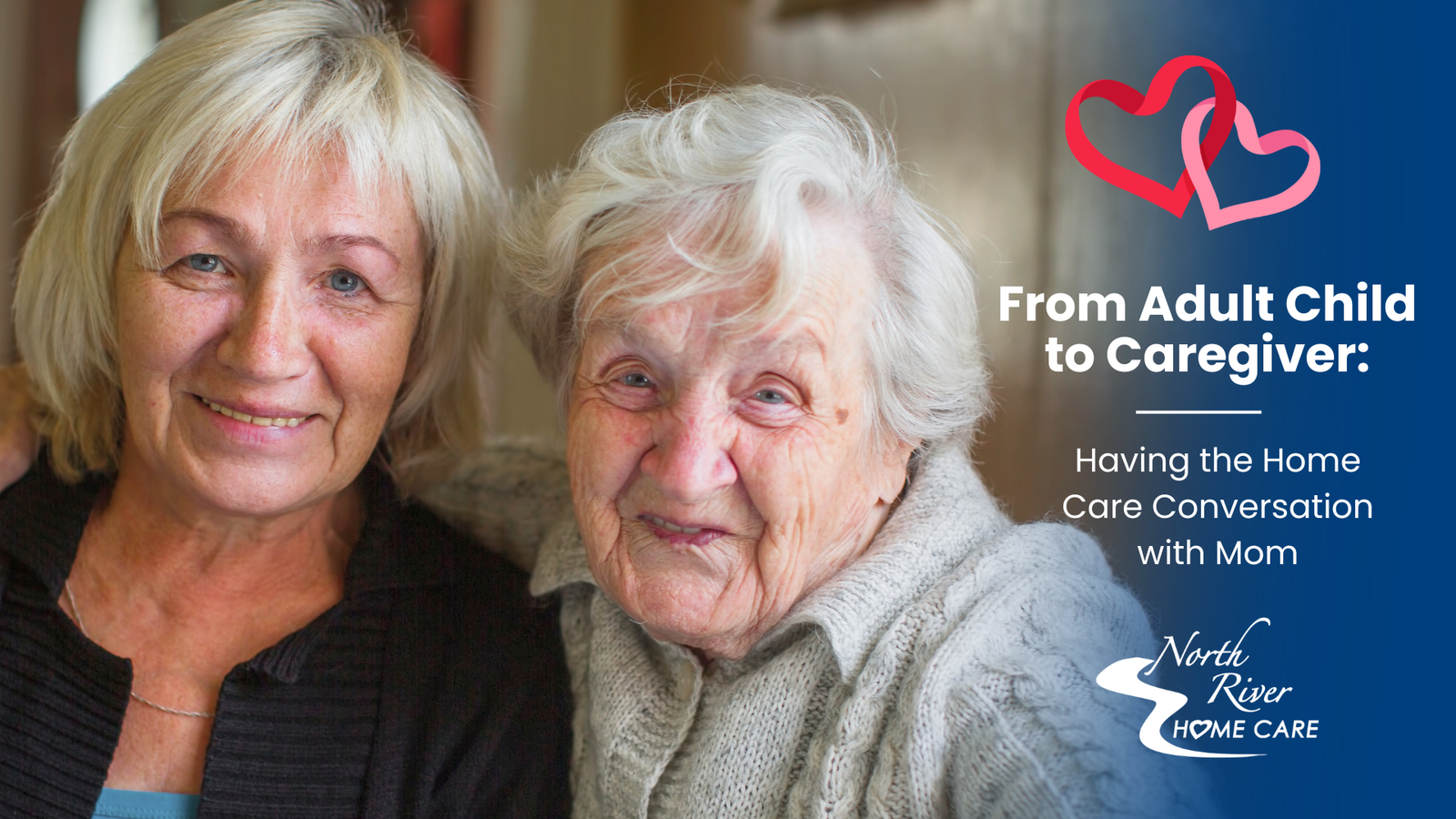
For many of us, this shift does not happen in one dramatic conversation, but in a slow accumulation of small moments. One day you are her child. The next, somehow, you are also her caregiver.
The Quiet Grief of Role Reversal
No one can truly prepare you for this part. We talk about the logistics of caring for aging parents, the appointments, the medications, the home modifications, but we rarely talk about the quiet grief of it. The way you can love every minute you spend with her and still mourn, just a little, the mother who used to take care of you.
This is one of the more disorienting aspects of becoming a caregiver to your own mother. You are not only learning new skills and managing new responsibilities; you are navigating a relationship that is changing shape in real time.
But here is what we have come to believe, after years of walking alongside families through this transition: the role of son or daughter doesn’t disappear when the role of caregiver arrives. It just makes room.
You don’t have to choose between being her adult child and being a caregiver.
One of the kindest things you can do for yourself, and for your mother, is to resist the idea that you have to become only a caregiver.
Letting her continue to mother you, in whatever ways she still can, is a gift to both of you. Ask her advice, even when you don’t strictly need it. Sit on the couch and watch the show you used to watch together. Let her tell you the story you’ve heard a hundred times before. These are not just nice gestures. They are the threads that keep the relationship intact through all the change.
What we see, repeatedly, is that caregiving doesn’t replace the parent-child bond. It deepens it.
There is an intimacy that comes with this season of life that simply is not available any other way. You learn the rhythms of her days. You hear stories from her childhood that never came up before. You see her, sometimes for the first time, as a whole person, not just your mother, but a woman with a life that began long before yours.
These moments are real, and they are worth protecting. Which is exactly why so many adult children reach a point where they recognize they cannot, and should not, do everything on their own.
Talking to Your Mom About Accepting Home Support
For many adult children, the harder part is not recognizing that help is needed. It is having “The Conversation”.
Most mothers of this generation were raised to be independent, capable, self-sufficient. They took care of everyone else. The idea of someone coming into their home to help them bathe, cook, or get dressed can feel, to them, like an admission of failure or a step toward losing themselves entirely. Their resistance isn’t stubbornness. It’s a form of grief, pride, and fear, all bundled together.
Going into the conversation with that understanding changes everything.
Here are approaches to talking about home care that work well for families:
Start the conversation early, before it is a crisis. It’s much easier to talk about home care as an option when no one is in panic mode. If you can plant the seed during a calm moment, you give your mom time to sit with the idea instead of feeling cornered by it.
Lead with her independence, not her decline. Frame home care as something that helps her stay in her home, on her terms, doing the things she loves. Most older adults want to age in place for as long as they can. A caregiver who helps with the harder parts of the day is often the very thing that makes that possible. The message is not “you need help”; it is “this is a way you can stay longer in the home you love”.
Use yourself as part of the reason. Sometimes mothers will accept help for their children’s sake long before they will accept it for their own. It’s okay to say, “Mom, it would mean so much to me to know someone is checking in on you during the week.” You’re not manipulating her by being honest. You are inviting her to take care of you in a way she still can.
Start small. A few hours a week of companionship or help with light housekeeping is far less threatening than a full-time caregiver. Many mothers who initially resist accepting support warm up quickly once they meet the actual person who shows up. The relationship developed with their caregivers, and the quality of life it allows, become their own reasons.
Listen to her thoughts and opinions. Bring her into the process. Listen to her feedback and opinions about ways to make this more comfortable for her. Talk about the type of help that would make her life more enjoyable, more social, or more comfortable. The more agency she has in shaping what care looks like, the more likely she is to embrace it.
Expect more than one conversation. This is rarely settled in a single sitting. Plant the seed, let it air, come back to it. Sometimes a small incident, a fall that turns out to be nothing, a missed appointment, or a particularly difficult week create the moment when she’s finally ready to consider home support. Be patient.
Give yourself grace, too. You are not failing if she pushes back. You’re not betraying her by suggesting it. You are loving her in a forward-looking way, trying to set up the next chapter so it goes as well as possible for both of you.
Acknowledge Your Own Feelings About Accepting Help for Your Parent
As an adult child, asking for help can feel like failing, like admitting we’re not enough, or that we don’t have our priorities straight. But, in fact, the opposite is true.
When you let a caregiver help with the bathing, the meal prep, the medication management, the long afternoons that need filling, you are not stepping back from your role. You’re protecting it. You’re making space to be her son or daughter again, instead of just her caretaker, scheduler, or driver. It opens space for you to reconnect and nurture your family bond.
The families we work with often express to us how the ability to “share the load” has made them a more present son or daughter. By getting home support for your parent(s), you are not “outsourcing” the love and affection you have for each other. You are ensuring you have enough of yourself left to give it. Outside caregivers help manage the hands-on care, so that adult children can go back to being adult children, sharing a cup of tea, looking through old photo albums, holding their mother’s hand … without also mentally running through tomorrow’s to-do list.
You are adding a chapter that will, in time, become one of the more meaningful parts of your shared story.
You are still her child. You always will be. And the love you’re giving her now, messy, and exhausted and imperfect as it sometimes feels, is the same love she gave you when you were small and needed her most.
It just looks a little different now. And that’s okay.