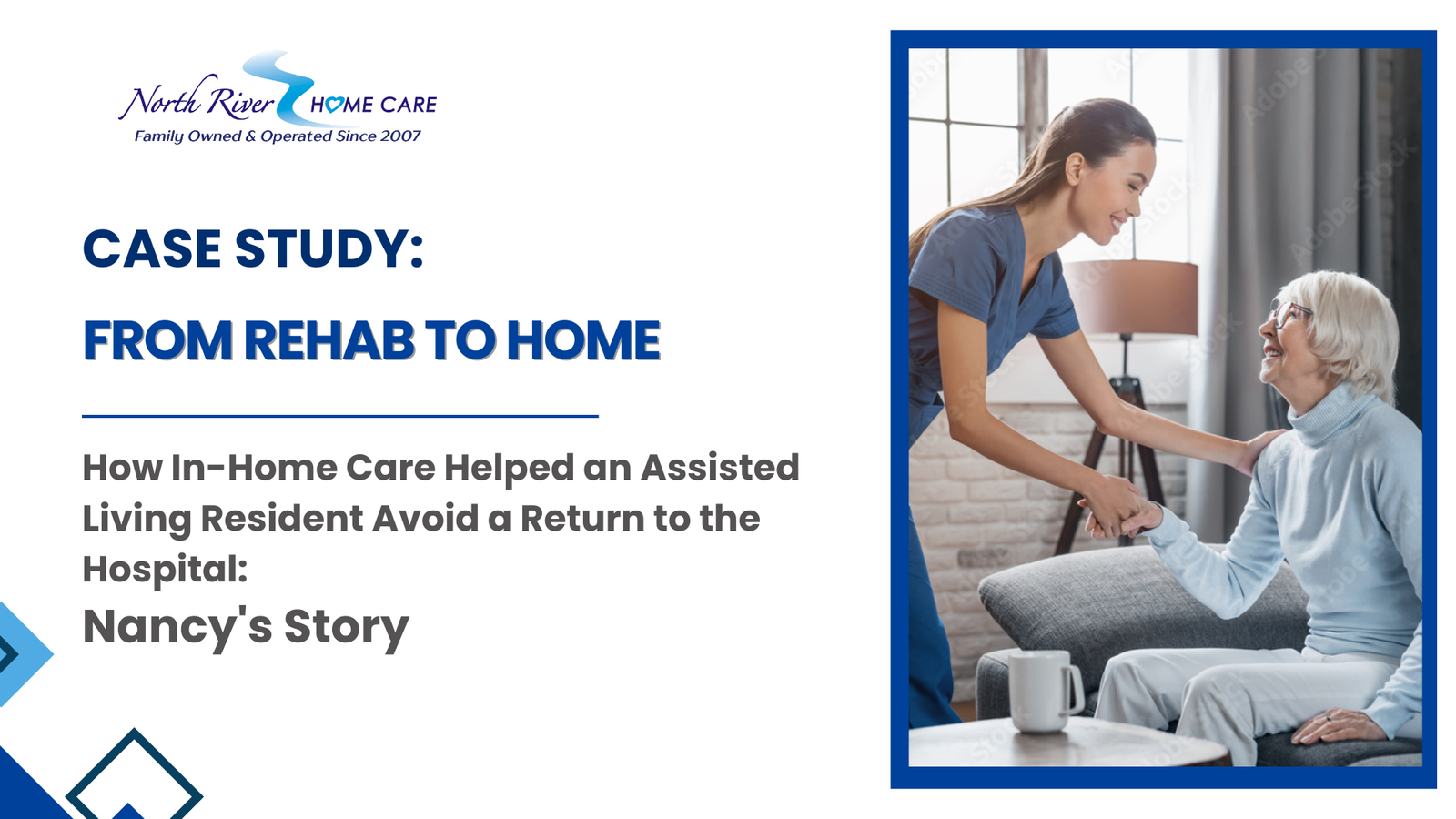
Nancy, 79, who had never had home care support before, had lived independently in her assisted living community on the South Shore for several years. She was social, sharp, and proud of her routines: morning coffee with neighbors, an afternoon walk, weekly calls with her daughter in Connecticut.
When a urinary tract infection escalated quickly and landed her in the hospital, followed by two weeks in a skilled nursing facility for rehabilitation, everyone hoped the transition back to assisted living would be smooth.
It was a harder return than expected.
The Challenges of Avoiding Hospital Readmission
Nancy came home weaker than anticipated. The UTI had taken more out of her than it might have a decade earlier, and the rehab stay, while helpful, had left her deconditioned and fatigued. It was clear she needed an additional layer of support to get back on her feet safely.
Within the first few days, several warning signs emerged:
- Nancy was skipping meals. Fatigue made the walk to the dining room feel overwhelming, and she didn’t want to ask for help.
- She was unsteady on her feet. The risk of a fall – and another hospitalization – was real and present.
- She was withdrawing socially. Feeling unlike herself, Nancy had stopped joining her neighbors for morning coffee and was spending most of her time in her apartment alone.
Her daughter, calling from out of state, could hear the change in her mother’s voice. Nancy’s primary care physician flagged her as high-risk for readmission at her follow-up appointment
The Home Care Opportunity
The Assisted Living Facility referred the family to North River Home Care. After an initial assessment, NRHC’s Care Advisor met with Nancy, her daughter, and the assisted living community’s wellness director to develop a collaborative plan that addressed not just Nancy’s physical needs, but her daily rhythms, her preferences, and the specific gaps in her recovery support.
The goal was to work alongside the assisted living team to add dedicated, one-on-one care during a vulnerable window, and ensure everyone involved had a clear picture of how Nancy was doing day to day.
How In-Home Care Made the Difference
Consistent, one-on-one caregiver presence. A dedicated North River Home Care caregiver was scheduled to be with Nancy each morning and early evening – the times of day when she was most fatigued and most at risk.
Nutrition support. Nancy’s caregivers accompanied her to the dining room each morning and evening, providing the gentle encouragement and safety monitoring that made the difference between a missed meal and a nourishing one. On harder days, the caregivers prepared light snacks and ensured Nancy stayed hydrated throughout the day, a key factor given that dehydration had contributed to her original UTI.
Fall prevention and mobility support. Nancy’s caregiver assisted with safe transfers, accompanied her on short walks to rebuild stamina, and kept a close eye on any changes in her gait or balance. A simple assessment of Nancy’s apartment identified two small but meaningful hazards that were quickly remedied.
Communication across the care team. One of the most valuable things the North River care team contributed was a consistent communication link between Nancy, her family, and her assisted living care team. Regular updates kept Nancy’s daughter informed and reassured. Observations from the caregiver were documented and shared with the full care team, giving everyone a fuller picture of Nancy’s day-to-day health than any single provider could see on their own.
Emotional support and re-engagement. Nancy’s caregiver noticed her withdrawal and gently worked to address it by engaging with her at every visit and eventually walking with her to morning coffee so she didn’t have to go alone. Within a few weeks, Nancy rejoined in her regular social routines. Her daughter noticed the shift immediately.
The Outcomes
Six weeks after returning from rehab, Nancy had regained much of her strength, was eating and hydrating consistently, resumed her daily routines, and avoided readmission to the hospital. The medication error that was caught early on was corrected without incident. Her physician noted at her follow-up that she was progressing well.
Her daughter put it simply: “I don’t think my mom would have stayed out of the hospital without this support. The team at North River didn’t just take care of her they paid attention and gave me and my family peace of mind.”
Nancy continues to receive morning caregiver support twice a week as a maintenance measure, giving her family peace of mind and her care team an ongoing window into her wellbeing.