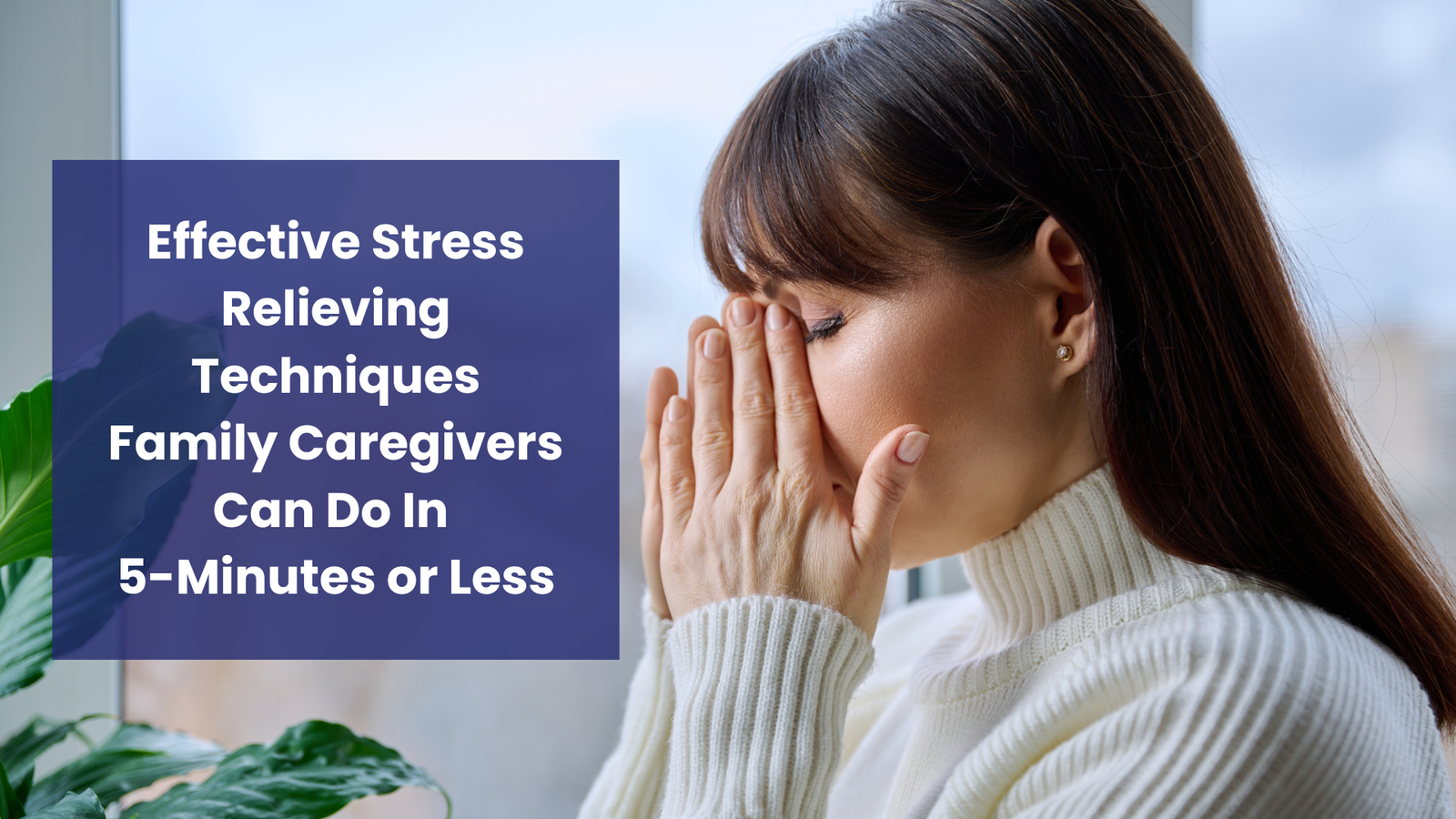
Stress relief is extremely important to prioritize for everyone, but especially if you are a caregiver.
If you’re a caregiver, you already know all about stress, but how often do you show yourself the same compassion and kindness you give others day after day?
You show up early, stay late, remember every medication and appointment, and pour yourself into the people you care for. It’s meaningful, important work … and it’s also exhausting.
Here’s something that’s easy to lose sight of: you can’t pour from an empty cup.
Taking care of yourself isn’t a luxury or an afterthought. It’s what makes it possible for you to keep showing up for your loved ones, your friends, and your community.
The good news? You don’t need an hour at the spa or a week-long vacation to feel better. Sometimes, five minutes is all it takes.
Here are 15 quick, realistic ways to give yourself a little care, along with a few thoughts on why self-care can be difficult for caregivers to prioritize.
Why Self-Care Can Be Difficult for Caregivers
Before we get to the tips, let’s talk about something real: most caregivers don’t neglect their own well-being because they don’t care.
They do it because caregiving culture often rewards selflessness to a fault. A few of the most common reasons caregivers skip self-care include:
- Guilt: Taking a break – even a five-minute one – can feel like you’re abandoning the person who needs you. The truth is, rest makes you a better caregiver, not a worse one.
- The “not enough time” trap: When your days are packed, self-care feels like one more thing on an already impossible list. But five minutes isn’t a time commitment – it’s a mindset shift.
- The needs of others always feel more urgent: Caregivers are wired to prioritize. When someone else needs something, it almost always wins over your own needs.
- Caregiver identity: For many people, being a caregiver becomes so central to who they are that they forget about their own needs. Your worth isn’t only tied to what you do for others.
- Physical and mental fatigue: When you’re exhausted, even small acts of self-care can feel like too much effort. Ironically, that’s exactly when you need them most.
Recognizing these patterns is the first step. The second step is giving yourself permission to do something small – right now, today – just for you.
15 Ways to Relieve Stress in 5 Minutes or Less
Stress Relief for Your Body
Box Breathe. Inhale for 4 counts, hold for 4, exhale for 4. Just two or three rounds can calm your nervous system almost instantly. It sounds simple because it is … and it works every time.
Roll Your Shoulders Back. Tension loves to hide in your neck and shoulders. Roll them back slowly three times and feel it release. Caregiving is physical work, and your body carries more stress than you realize.
Splash Cold Water on Your Face. It sounds too simple to be effective, but it works. A quick splash resets your nervous system and pulls you out of a stress spiral in seconds.
Stretch Your Hands and Wrists. Caregiving is hard on your hands. Spend two minutes gently stretching the hands and wrists that do so much every single day.
Drink a Full Glass of Water. Caregivers often forget their own most basic needs. Hydration does more for your stress levels and energy than most people realize and it takes less than a minute.
Stress Relief for Your Mind
Do a Brain Dump. Grab any piece of paper and spend two minutes writing down everything that’s on your mind. No organizing, no editing. Getting things onto the page can immediately reduce the mental weight you’re carrying. You can throw it away after, if you’re concerned someone may read it. It’s the act of getting it out of your head that matters most.
Step Away from Your Phone. Put your phone face-down for five minutes. The notifications will wait. You need a break from the noise more than you may realize.
Repeat a Simple Mantra. “I am doing enough“, “I am not alone“, and “My wellbeing matters” are some examples. Pick one and say it three times out loud is best if you can, or in your head if you can’t. It sounds small. It isn’t. Combine this with Box Breathing and you can destress your mind and body simultaneously.
Close Your Eyes for 60 Seconds. No screen. No noise. No input. Just one quiet minute completely to yourself. You’d be surprised how much one intentional minute of stillness can do.
Laugh at Something. Pull up a funny video, a meme, or a memory that makes you smile. Laughter is one of the fastest stress relievers there is, and you deserve to feel light, even for a moment.
Stress Relief Your Spirit
Step Outside. Even two minutes of fresh air and natural light can shift your mood. You don’t need to walk or do anything … simply standing outside and feeling the air and sun on your face gives your mind and body a genuine reset.
Text Someone You Care About. Connection is one of the fastest antidotes to stress. Two lines to a friend or family member, even just “thinking of you“, reminds you that you have a support system, too. You don’t have to do this alone.
Say One Thing You’re Grateful For. Out loud, in your head, or in a text. Just one. It’s enough to gently shift your perspective, even on the hardest days.
Put on One Song You Love. Three minutes of music that makes you happy is a legitimate mood shift. It’s not a waste of time; it’s a reset. Press play.
Tidy Up One Small Space. Clear a counter, straighten a pillow, throw something away. A little order on the outside creates calm on the inside. And the sense of accomplishment? That’s a bonus.
The Bigger Picture: Making Self-Care a Habit, Not an Afterthought
Five-minute resets are powerful, but they work best when they’re part of something larger. If self-care keeps falling to the bottom of your list, it may be time to think about how you’re setting yourself up for success.
Here are some bigger-picture strategies to help you make your own well-being a consistent priority, not just something you squeeze in on a hard day.
- Build it into your schedule … literally. Self-care doesn’t happen by accident. If things are not on your calendar they tend to disappear when life gets busy. Block time for yourself the same way you’d block time for an appointment. Even 15–30 minutes a few times a week adds up in very meaningful ways.
- Tell someone what you need. Whether it’s a family member, a colleague, or a supervisor, let someone in your circle know that you’re working on prioritizing your own health. Accountability matters. So does having someone who can step in and cover for you when you need a longer break.
- Learn to recognize your warning signs. Caregiver burnout doesn’t typically happen all at once – it builds. Start paying attention to your own signals: Are you sleeping poorly? Feeling resentful? Getting sick more often? Losing patience? These aren’t character flaws. They’re your body and mind telling you something important. The earlier you listen, the easier it is to course correct.
- Connect with other caregivers. There’s something uniquely healing about being around people who truly understand what your days look like. Caregiver support groups – whether in person or online – offer a space to vent, share strategies, and feel less alone. If you haven’t found your community yet, it’s worth looking for.
- Consider talking to a professional. Therapy, counseling, a spiritual advisor, or a few sessions with a social worker can be genuinely life-changing for caregivers. You don’t have to be in crisis to benefit. Having a dedicated space to process what you’re carrying, without worrying about burdening anyone else, is a gift you can give yourself.
- Revisit your boundaries regularly. Boundaries aren’t about caring less. They’re about making sure you can keep caring at all. Check in with yourself periodically: Are you taking on more than you agreed to? Are there tasks that could be shared or delegated? Protecting your capacity isn’t selfishness … it’s sustainability.
- Celebrate what you’re doing right. Caregivers are quick to notice what they didn’t get to, what they could have done better, or where they fell short. Try flipping that script. At the end of each day, name one thing you did well for someone else, and one thing you did for yourself. Small wins deserve recognition, too.
You give so much to the people in your care. You notice the small things, remember the important things, and show up even when it’s hard. That kind of dedication matters more than words can say.
But you matter, too. Your health, your peace of mind, and your energy are not optional extras; they’re what make everything else possible. So the next time you find yourself about to skip a break, remember: five minutes isn’t selfish. It’s smart. It’s sustainable. And it’s something you’ve more than earned.
Start with just one tip from this list today. That’s all it takes to begin.