Quick answer: Home care after hospital discharge starts with a few steps in the first week: ask the discharge team what changed, match medicines to the discharge list, clear the path, plan the first night, and go to the follow-up visit. A caregiver can help with bathing, meals, reminders and company. Care can start with a few shifts a week.
The call came fast. The hospital says your dad can go home tomorrow. You have a lot of questions and not much time.
Take a breath. You don’t have to do everything at once. This guide to home care after hospital discharge covers what matters most in the first week, in the order it usually matters.
What is home care after a hospital stay?
Home care after a hospital stay is non-medical help at home during recovery. It can include bathing, meals, reminders and company. It works alongside the doctor, nurses and therapists. It doesn’t replace them.
Before they leave the hospital
Ask the discharge team these questions. Write down the answers.
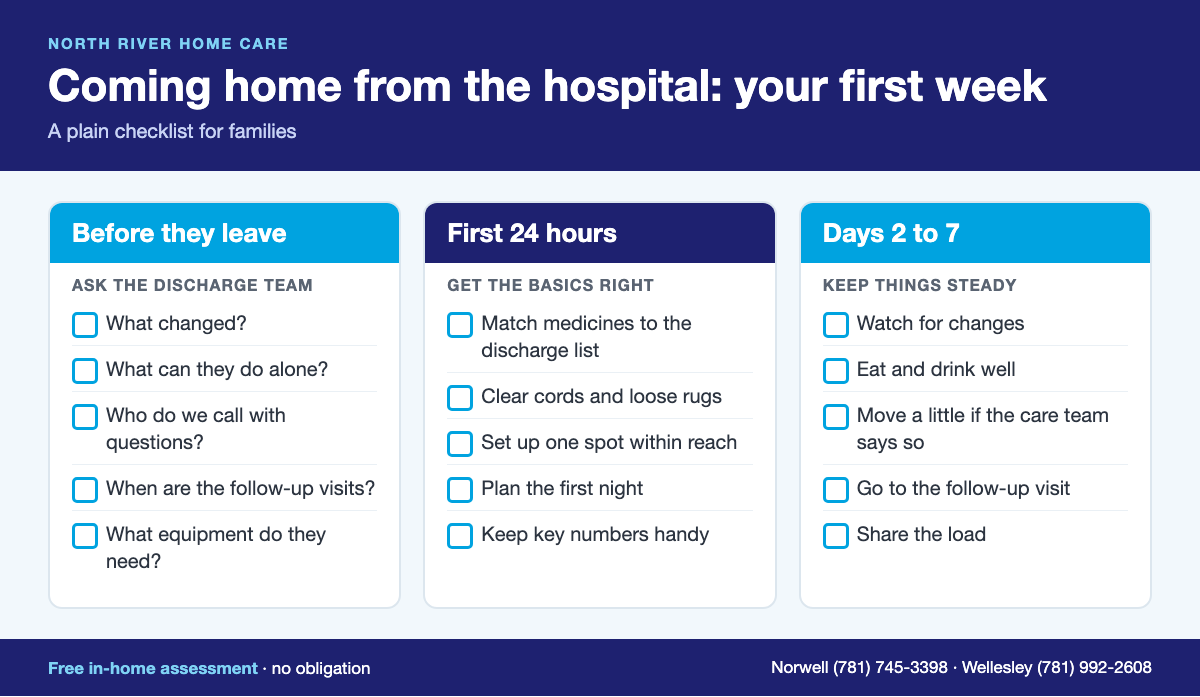
- What changed? New diagnosis, new medicines, new limits?
- What can they do alone, and what do they need help with?
- Who do we call with questions after we’re home?
- When are the follow-up visits?
- Do they need equipment, such as a walker, a shower chair or a hospital bed?
You can ask the staff to repeat anything. An explanation can go by fast on a busy day.
The first 24 hours
- Get the medicines straight. Match the discharge list to what’s in the house. Ask the pharmacist if anything is unclear. Our guide on taking medications on time has simple routines.
- Clear the path. Move cords, loose rugs and clutter. Make sure there’s light on the way to the bathroom. More than one out of four older people falls each year, according to the CDC. See our tips on fall prevention and safety and home modifications.
- Set up one spot. Water, phone, glasses, remote and medicine in reach.
- Plan the first night. Who will be in the house? If the answer is “no one,” that’s worth solving now. Overnight care is one option.
- Keep the numbers handy. Doctor, pharmacy, and a family member.
Days 2 to 7
- Watch for changes. New confusion, a fall, poor appetite or pain. Call the doctor with questions. Call 911 in an emergency.
- Keep eating and drinking. Simple meals, small portions, plenty of water. Ask about any diet rules from the hospital.
- Move a little each day if the care team says it’s okay.
- Go to the follow-up visit and bring the list of questions you’ve been writing.
- Share the load. Make a simple schedule so one person isn’t carrying it all.
When help at home makes the week easier
You may be able to do all of this yourself. Some families can’t, or shouldn’t have to. Care at home can help with:
- Bathing, dressing and getting around safely
- Meals and light housekeeping
- Reminders to take medicines the doctor has prescribed
- Company, so your loved one isn’t alone
- Overnight help during the hardest nights
These are part of our companionship and personal care and rehabilitation home care services. Care can start with a few shifts a week and change as your parent gets stronger. You may need help for only a few weeks. We’ll tell you if we think you don’t need it.
To see how this can look, read Home Care Support From Rehab to Home and how in-home care helped Nancy.
A word for you
A hospital stay is stressful for the whole family. It’s okay to feel tired, scared or short on patience. Asking for help isn’t giving up. It’s part of caring well. If guilt shows up, you’re not alone. Read guilt and caring for an aging parent.
Frequently asked questions
What should I ask the hospital before my parent comes home? Ask what changed, what they can do alone, who to call with questions, when the follow-up visits are, and what equipment they need. Write down the answers. You can ask the staff to repeat anything. A short list of questions helps when the day is busy.
How fast can care start? Call us as early as you can, even before discharge. We’ll talk through what you need and what comes next.
What’s the difference between home care and home health care? Home health care is medical care ordered by a doctor. Home care is non-medical help with daily life, such as bathing, meals and company. Some families use both during recovery. Our guide explains the difference.
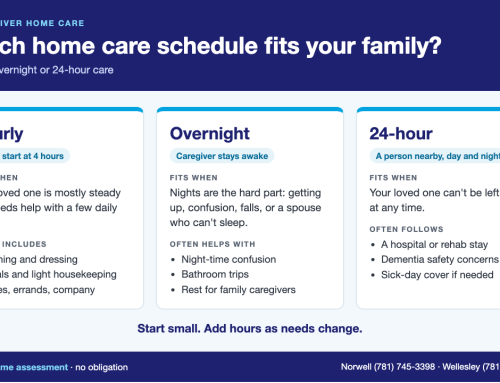
Can care start with just a few hours? Yes. Our shifts start at four hours. You can add more as your parent gets stronger or needs more. Some families need help for only a few weeks. See hourly, overnight or 24-hour care.
Who will come to the house? A North River caregiver. All our caregivers are our own employees. They are background-checked, insured and bonded. We never subcontract. Learn more about our caregivers.
Which office will help us? Our Norwell office serves the South Shore. Our Wellesley office serves MetroWest.
Next step
Your loved one is about to come home, and you’re not sure how to cover the first week? Call us. We’ll talk through your situation. The in-home assessment is free, with no obligation.
Inquire about services Or call Norwell at (781) 745-3398 or Wellesley at (781) 992-2608.
About North River Home Care
North River Home Care is a family-owned, private, non-medical senior home care agency. Since 2007, we have served families on the South Shore from our Norwell office and in MetroWest from our Wellesley office. Our 250+ caregivers are our own employees, background-checked, insured and bonded.
Sources
- Centers for Disease Control and Prevention, Older Adult Fall Prevention: Facts and Statistics